

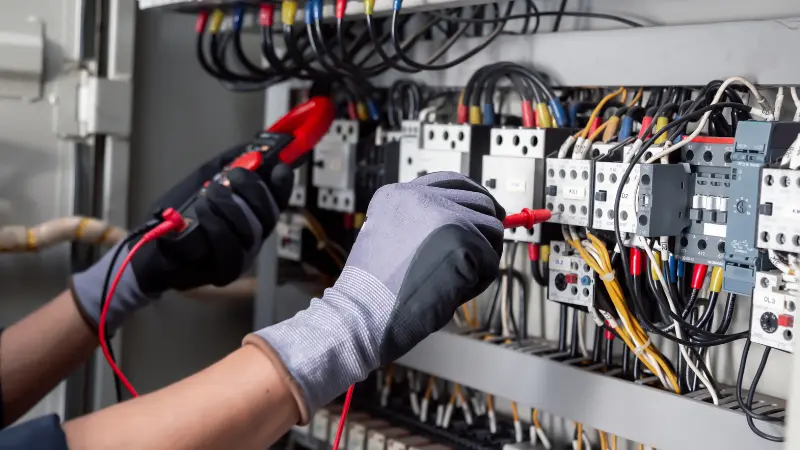
A facility can go from normal to stalled in minutes when the power starts acting up. Lights dim, equipment drops offline, access controls misfire, and staff lose time while someone searches for the cause.
That’s why commercial electrical repairs are more than routine upkeep. Fast, skilled work lowers fire and shock risks, protects costly assets, and keeps the building ready for daily use. In busy offices, warehouses, and plants, a small fault can spread faster than most teams expect. The longer it sits, the more likely it is to affect HVAC, security, data systems, or a production line.
Commercial electrical systems fail in ways that aren’t always visible. Worn wiring can overheat inside walls. Overloaded circuits can trip repeatedly until the equipment shuts down entirely. Damaged panels, loose connections, and failing fixtures can cause arcing, low voltage, or sudden outages. For facility managers, the challenge is that a single faulty component can affect far more than one room.
Many problems show up early. Contact a commercial electrician if you notice any of the following:
These indicators often correlate to hidden heat buildup, loose terminations, or excess load on a circuit. Catching them early can prevent larger, costlier failures later on.
A loose lug in a panel may start as one nuisance trip. Left alone, it builds heat, weakens nearby parts, and can take down a wider section of the system. Voltage swings also wear out motors, drives, servers, and controls. What looked minor before can bring production to a halt later in the week. Early repairs keep the fix local, which usually keeps costs lower.
Quality repair work starts with safety and protects uptime. When electricians restore sound connections, correct load issues, and replace failing parts, the building becomes more stable. Stability matters in spaces where lighting, HVAC, data, and security all share the same electrical backbone.
Prompt repairs reduce the chance of shock, fire, and lighting failure. They also help emergency systems work when needed, including exit lighting, alarms, and powered door hardware. Building teams that prioritize workplace safety and electrical maintenance often have fewer surprises because hazards are addressed before someone gets hurt.
Steady power protects more than light fixtures. The following equipment is all vulnerable to voltage drops, overheating circuits, or breaker failures:
Repeated interruptions shorten equipment lifespan and drive up repair costs. In many cases, the electrical fault is the root cause of a secondary failure, like a burned-out motor starter or a frozen server.
When electrical systems work as designed, teams keep moving. Offices avoid lost productivity. Warehouses keep pick lines active. Production floors stay closer to schedule. Experienced commercial electrical contractors also know how to phase work to minimize disruption: coordinating with other trades, protecting access points, and keeping repairs controlled rather than chaotic.
Not every repair addresses the root problem. A quality service visit looks beyond the surface issue, follows applicable codes, verifies the results, and provides the owner with clear next steps.
Skilled electricians don’t stop at the tripped breaker or dark fixture. They trace the issue through:
The actual cause of failures may be a loose upstream connection, an overloaded circuit, moisture intrusion, or a damaged panel component.
Commercial buildings place different demands on electrical systems than residential properties. Load levels are higher, equipment is more sensitive, and downtime is more costly. Repairs require the right materials, proper ratings, and code-compliant installation, particularly around the most common risk areas: overload, heat, and outage prevention.
After every repair, the work should be verified under real operating conditions. This includes:
Good teams also document what they found, what they fixed, and what to monitor going forward. For owners managing multiple properties, this record transforms a single repair visit into a smarter, ongoing maintenance plan.
Power issues rarely stay contained for long. Timely commercial electrical repairs prioritize people first, then equipment, schedules, and the system’s long-term life. When qualified crews identify the root cause, make code-compliant repairs, and confirm results through testing, buildings become safer and more dependable.
A flicker, a buzz, or a warm outlet is often the first warning sign. The team at Moltus Building Group is ready to help you catch problems early before they affect your people, your equipment, or your bottom line. Contact Moltus Building Group to schedule a service visit, or explore our full range of commercial facility maintenance services to see how we keep facilities running at their best.
Partner with Moltus Building Group for commercial and industrial facility maintenance services backed by experienced management, modern solutions, and reliable project delivery. We help maintain operational efficiency, safety and compliance, improved appearances, and cost savings.