

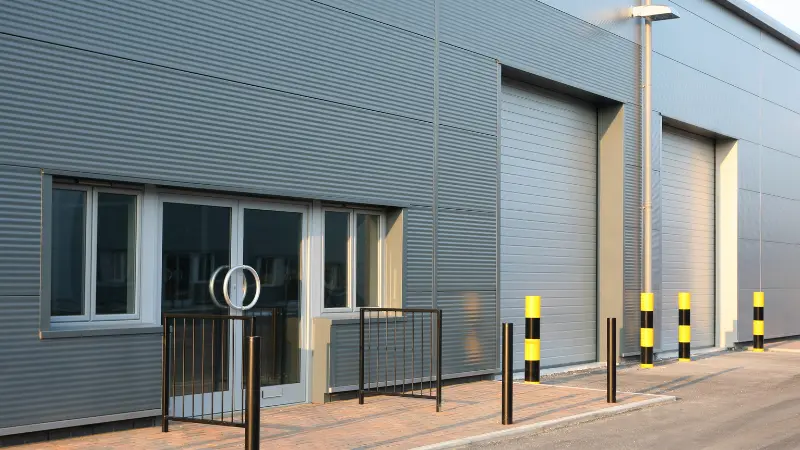
A low-speed vehicle strike can crack a wall, crush equipment, or hurt someone in seconds. That is why steel bollards show up around commercial and industrial buildings.
They create a tough barrier at loading docks, utility pads, storefronts, entrances, and walkways where traffic gets close to people and property. For facility teams, that simple barrier can prevent repairs, shutdowns, and injuries.
The right setup depends on the site. Traffic patterns, turning space, and the level of protection needed should shape the plan before work starts. Even small layout choices matter.
At their core, steel bollards keep vehicles away from what they should not hit. They protect:
On industrial sites, forklifts and yard trucks create the highest risk. At retail and office buildings, delivery vans, service vehicles, and customer traffic are the bigger concerns. The right bollard setup addresses the specific risk at each location.
Placement varies by site type, but steel bollards are regularly found at:
Spacing and layout must match daily traffic flow. A warehouse may need bollards tight to door frames and equipment pads. A front sidewalk may need a wider pattern that keeps people safe without pinching the walking path. At loading docks, a few inches of placement error can interfere with doors or trailer swing.
Good installs are planned long before the core drill or excavator arrives. Paper planning saves field fixes.
Not every site needs the same post, spacing, or rating. Key factors to evaluate include:
Footing depth can make or break the install. Before work begins, crews need to assess:
Experienced commercial construction teams know that bollard installation touches site prep, concrete work, and utility coordination simultaneously. Catching conflicts in the planning phase is far less expensive than resolving them in the field.
A well-planned layout protects people without blocking work. Spacing, striping, color, and lighting should make bollards easy to see while still leaving room for deliveries, maintenance, and emergency response. High-visibility colors work best where drivers and lift operators approach from multiple angles.
For sites with public access, CPTED design guidance is useful because it shows how barriers can define safer pedestrian zones without closing off the property.
Strength comes from the whole assembly, not the steel post alone.
Concrete foundations do the heavy work during impact. Common failure points include:
On high-use commercial sites, shortcuts at the footing stay hidden until the first strike. A strong-looking post means little if the base cannot hold.
Finish matters because bollards live outdoors or in hard-use interiors. Paint can improve visibility. Galvanized steel resists rust better in wet or corrosive areas. Protective sleeves or wraps help reduce scuffs and make replacement easier when appearance counts.
Local rules still shape the final install. Many projects need to protect accessible routes, keep fire access clear, and follow company safety standards for traffic control and fixed equipment.
That review should happen before materials arrive, not after holes are drilled. Early coordination helps avoid moving posts after the concrete sets.
After any strike, inspect both the bollard and the surrounding concrete. Look for:
A post may still look serviceable after a bump, but the footing may have shifted. Quick post-impact inspection prevents a minor issue from turning into a false sense of security.
Routine checks are simple and worth the time. A short inspection record helps facility teams:
Steel bollards work best when the plan fits the risk, the footing is built right, and the layout respects daily operations. That combination is what turns a steel post into reliable, long-term protection for people, buildings, and equipment.
At Moltus Building Group, we bring 135 years of combined leadership experience to commercial and industrial construction projects across North America. From site prep and concrete work to full facility services, our self-performing crews handle the details that protect your people and your investment.
If you are looking for a partner on your next commercial construction project, contact the Moltus Building Group team today to discuss getting started.
Partner with Moltus Building Group for commercial and industrial facility maintenance services backed by experienced management, modern solutions, and reliable project delivery. We help maintain operational efficiency, safety and compliance, improved appearances, and cost savings.