

Find out what sets an integrity-driven contractor apart from the rest.

Commercial Gutter Installation: Preventing Water Damage + Extending Lifespan

Commercial Gutter Installation

Uncontrolled rainwater can accelerate a building’s deterioration more than most owners expect. It stains walls, weakens roof edges, floods entrances, and puts pressure on the foundation.

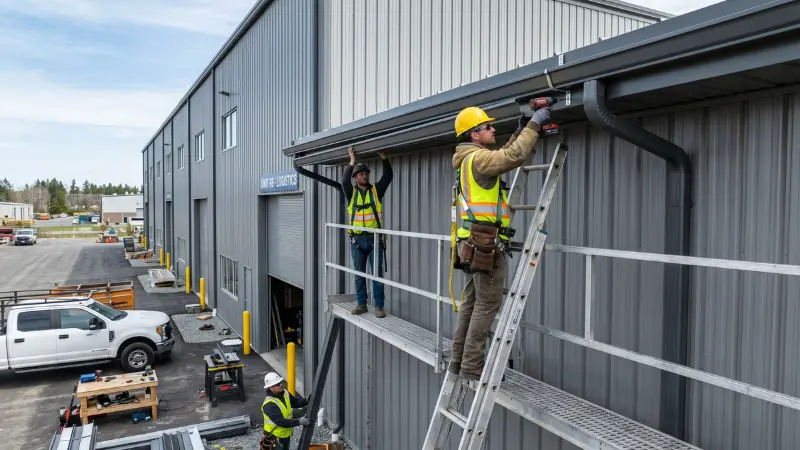
That is why commercial gutter installation is more than a finishing detail. A well-built system moves water away from the roof, walls, and base of the structure, protecting the building envelope and helping the property last longer. That matters even more in large facilities, where one weak drainage path can affect several building systems at once.

How Gutters Protect a Commercial Building from Damage

When the system is sized and placed correctly, it reduces pressure on the building envelope from the roof edge down to the foundation and is a key part in maintaining a commercial facility.

What Happens When Rainwater Has Nowhere to Go?

Without a clear path, water falls straight off the roof edge or backs up at low points. Then it pools near the building, washes out soil, and can settle against the foundation. Over time, that moisture can stain masonry, rot fascia, and damage soffits or roof edges.

Problems also show up inside. Water can slip behind cladding, find gaps near wall joints, and trigger leaks that look small at first. Later, those leaks can lead to mold, ceiling damage, and repairs that reach far beyond the gutter line. Entrances, sidewalks, and loading areas also take a hit when runoff creates erosion or slick surfaces.

Why Commercial Buildings Need a Stronger System than Homes

A commercial roof can shed a huge volume of water in a short storm. Low-slope roofs also drain differently from steep residential roofs, and runoff often concentrates in fewer discharge points. That means the gutter system has to handle more load, more force, and longer flow paths.

Building use matters too. A retail center, warehouse, and office building won’t drain the same way. Roof size, parapets, canopies, and traffic at grade all change the design. Because of that, commercial work needs a system matched to the building design.

Key Components of a Commercial Gutter System

Long service life starts with the basic parts of the system. If those parts are selected well, the gutters stay straighter, drain faster, and need fewer repairs.

Choosing the Right Size, Slope, and Downspout Layout

Size controls capacity. If the gutter is too small, it overflows during heavy rain. If downspouts are too few or placed poorly, water backs up and adds weight to the run. That can lead to sagging joints, standing water, and leaks at seams.

Slope matters just as much. A gutter does not need a dramatic pitch, but it does need enough fall to move water toward outlets.

Commercial Gutter Materials: How to Choose the Right Fit

The right material depends on climate, roof size, and long-term maintenance expectations. Common options include:

  • Aluminum – Lightweight, rust-resistant, and cost-effective. The most common choice for commercial buildings, though heavier commercial-grade gauges (0.040″ or thicker) are recommended over standard residential stock.
  • Galvanized or Galvalume Steel – Stronger than aluminum and better suited where impact resistance or heavy debris loads are a factor. Coatings and periodic maintenance become more important to prevent corrosion.
  • Copper – Long-lasting and visually distinctive, making it a strong fit for historic or high-end architectural applications. Comes with a higher upfront cost.

Freeze-thaw cycles, coastal air, and industrial exposure all affect how fast a material wears. Long-term value is about fit, not just first cost.

Why Guards, Sealants, and Secure Fasteners Matter

Small parts often decide whether the system stays tight over time:

  • Gutter guards – Help reduce leaf and debris buildup, cutting down on clogging and lowering the frequency of hands-on cleaning.
  • Sealants – Used at joints and outlets to stop slow leaks that can stain walls or quietly infiltrate wall assemblies for months before anyone notices them.
  • Fasteners and hangers – Wind, snow, and ice put serious strain on brackets, and if they’re spaced poorly or undersized for the gutter profile, sections will eventually pull away from the fascia.

What Good Commercial Gutter Installation Actually Looks Like

Good materials can’t fix poor layout or rushed workmanship. In commercial work, installation quality has a direct effect on service life and repair costs.

Getting the Pitch and Drainage Plan Right From the Start

Before installation begins, the team should map the roof shape, outlet locations, overflow points, and grade conditions below. That plan tells the installer where water will travel during normal rain and where it will go in a storm. Without that step, the system may look fine on day one and still perform badly.

That planning also protects adjacent work. Roof membranes, edge metal, canopies, and splash areas all need to line up with the drainage path. A missed detail at the edge can turn into a recurring overflow.

Making Sure the System Works With the Building Envelope

Gutters do not work alone. They connect to roofing, fascia, wall assemblies, and drainage at grade. If those parts do not work together, water can get trapped where it should be moving away.

On larger jobs, this is where experienced construction teams stand out. Field crews who understand carpentry details, concrete and site drainage, and roof edge conditions can catch conflicts early. Strong coordination with trusted subcontractors also helps, because commercial drainage often crosses trade lines.

Codes, Permits, and Compliance for Commercial Gutter Installation

Commercial gutter installation isn’t just a construction task; it’s part of a building’s regulated stormwater management system. In most jurisdictions, that means permits and code compliance are part of the job, not optional extras.

The two primary frameworks governing commercial drainage are the International Building Code (IBC), specifically Section 1503 on roof drainage, and the SMACNA Architectural Sheet Metal Manual, which provides guidance on sizing and fabrication standards. Together, they set the baseline for how commercial systems must be designed and installed.

A few compliance points worth knowing:

  • Permits are commonly required for new installations, full replacements, and any work that modifies the roof drainage design. Some municipalities also require a licensed contractor of record for commercial exterior work.
  • Secondary overflow drainage is a code requirement under IBC 1503.4 for flat and low-slope roofs. The overflow system must be sized to match the full capacity of the primary drainage system.
  • Skipping permits creates real exposure. An unpermitted system can affect insurance coverage and surface as a liability issue during property sales or inspections.

A qualified commercial contractor will tell you upfront what the permitting requirements are for your specific project and jurisdiction.

Commercial Gutter Maintenance: What to Do and When

Even a well-installed system needs routine care. The good news is that most maintenance is simple and low-cost when it happens on time.

Regular Cleaning and Inspection After Storms

Facility teams should check gutters after heavy rain, wind, or seasonal leaf drop. During each inspection, look for:

  • Debris or leaf buildup in gutters and downspout inlets.
  • Standing water, which indicates a poor slope or a blockage.
  • Loose joints, failed sealant, or visible rust.
  • Sections pulling away from the fascia or soffit.
  • Blocked discharge points at grade; a clear gutter still fails if water has nowhere to go at the bottom.

When Repairs are Enough, and When Replacement Makes More Sense

Repair is the right call when the issue is local, and the overall design is sound:

  • A single loose hanger or failed seal.
  • One dented or damaged section.
  • An isolated joint leak with no underlying slope problem.

Replace when the problem points to a systemic issue:

  • Recurring clogs that cleaning alone can’t solve.
  • Widespread corrosion across multiple sections.
  • A system that never drained well from the start.

Why Choose Moltus for Commercial Gutter Installation

A strong commercial gutter installation does more than move rainwater. It protects the roof edge, walls, foundation, and the daily use of the property. The best results come from proper sizing, durable materials, solid installation, and steady maintenance.

Moltus Building Group knows how to ensure those pieces work together to prevent water-related wear, keep repair costs minimal, and ensure the property has a better chance to perform well for years. Contact the Moltus team today if you are looking for a trusted partner in commercial facility maintenance and gutter installation.

Frequently Asked Questions About Commercial Gutter Installation

What is commercial gutter installation?

Commercial gutter installation is the process of designing and fitting a drainage system — gutters, downspouts, and supporting hardware — that moves roof runoff away from a building’s walls, foundation, and high-traffic areas.

Unlike residential systems, commercial installations are engineered for higher water volumes, longer roof spans, and greater structural loads. The system is matched to the specific building type, roof design, and local climate rather than applied as a one-size-fits-all solution.

How is commercial gutter installation different from residential?

Commercial roofs shed far more water in a short storm, often concentrating runoff at fewer discharge points. That means the system has to handle more load, more force, and longer flow paths than a home ever would.

Building use also affects the design: a warehouse, retail center, and office building all drain differently depending on roof size, slope, parapets, and ground-level foot traffic patterns. A residential contractor scaling up a standard house gutter is not the same as a system engineered for commercial demands.

What size gutters does a commercial building need?

There is no universal answer; commercial gutter sizing is based on the total roof drainage area, the roof’s slope, and local rainfall intensity data, typically measured for a 100-year storm.

Most commercial applications use gutters ranging from 6 to 8 inches wide, with larger box-gutter profiles common in warehouses and industrial buildings. Downspout sizing is calculated separately and must match the gutter’s drainage capacity. Any specification that skips this calculation risks overflow, standing water, and potential code non-compliance.

What is the best material for commercial gutters?

It depends on the building type, climate, and budget. Heavy-gauge aluminum (0.040″ or thicker) is the most common choice for office, retail, and light commercial buildings because it balances corrosion resistance, weight, and cost. 24-gauge galvanized or Galvalume steel is standard for metal buildings and warehouses where structural attachment and impact resistance matter more than aesthetics. Copper is a strong option for historic or high-end architectural applications but carries a significant cost premium.

Do commercial gutters require a permit?

In most jurisdictions, yes. Commercial gutter installation is typically part of a building’s regulated stormwater management system, which means permits are required for new installations, full replacements, and any work that modifies the drainage design. Some municipalities also require a licensed contractor of record for commercial exterior work.

Skipping the permit process creates real exposure; it can affect insurance coverage in the event of a water damage claim and surface as a liability issue during property sales or inspections. A qualified contractor will tell you upfront what the local requirements are for your specific project.

How long do commercial gutters last?

A properly installed and maintained commercial gutter system should last 30 to 40 years. The biggest variable is not material quality but maintenance consistency. Sealant joints typically need reapplication every 7 to 10 years, and the system should be inspected at least twice annually.

Systems that go without regular maintenance frequently fail in under 15 years due to blockages, sealant deterioration, and fastener corrosion, none of which are material failures. Routine care is what separates a 15-year system from a 35-year one.

How often should commercial gutters be cleaned and inspected?

Most commercial properties benefit from at least two inspections per year: one in late fall, before freeze cycles set in, and one in early spring, after snow-load season. Buildings surrounded by trees or in high-debris environments may need quarterly service.

Each inspection should cover debris removal, confirmation that water flows freely to all outlets, a check of sealant and expansion joints, and a review of downspout discharge points for erosion or blockage. Catching a minor issue during routine maintenance is far less costly than discovering hidden moisture damage in a wall assembly or foundation.

We Specialize in Commercial and Industrial Facility Maintenance Services that Maintain Building Operations

Partner with Moltus Building Group for commercial and industrial facility maintenance services backed by experienced management, modern solutions, and reliable project delivery. We help maintain operational efficiency, safety and compliance, improved appearances, and cost savings.